



Wind can seriously affect work with an aerial work platform, whatever the type of machine. The operator must make sure the MEWP is never exposed to wind above the limit set by the manufacturer: beyond it, the machine can become unstable.
What wind speed can a MEWP work in?
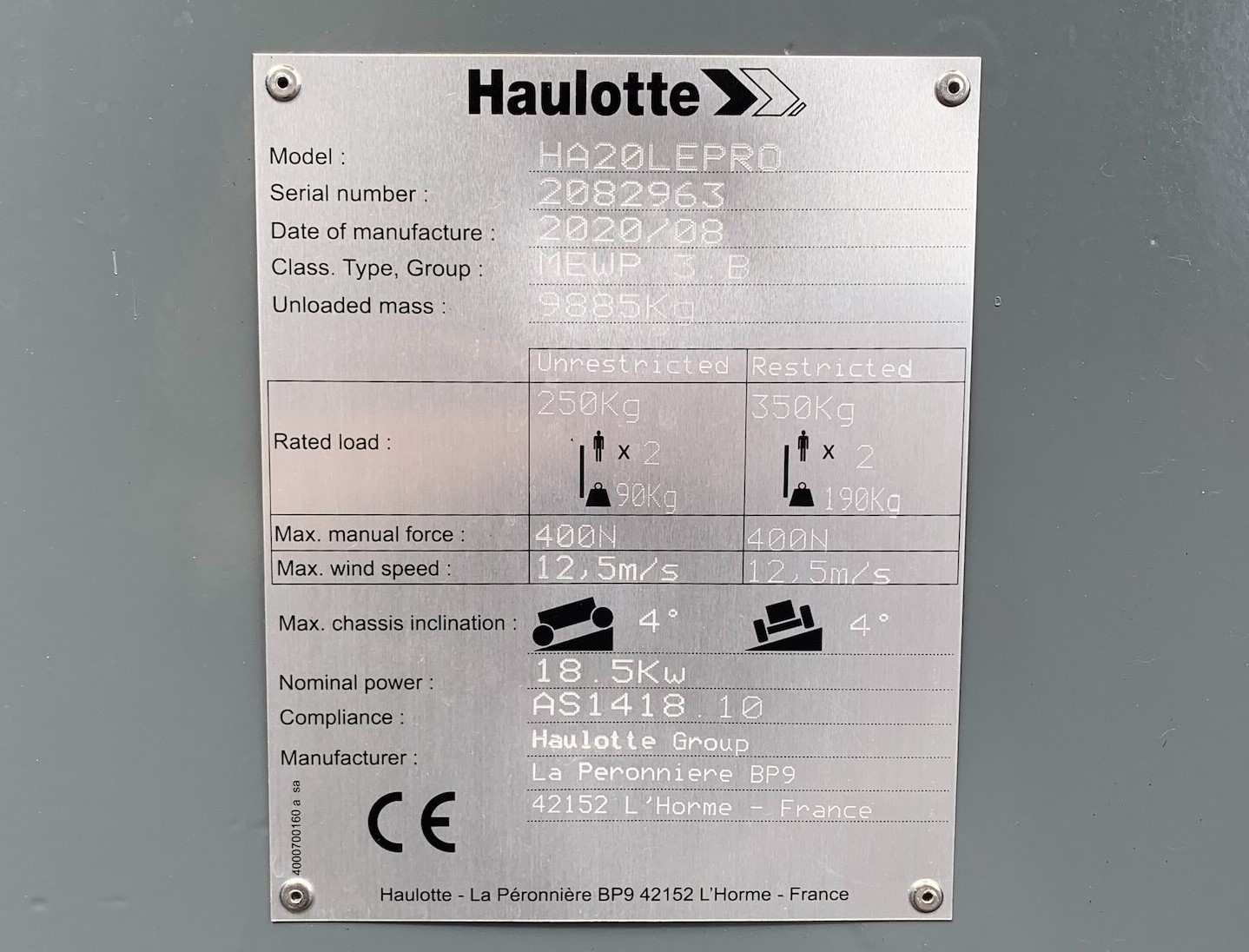
Wind and gusts cause accidents, so outdoor MEWPs are subject to wind speed limits. ISO standards set the maximum wind speed in which a MEWP can work at 12.5 m/s (45 km/h, 28 mph). Haulotte outdoor-rated machines are designed and manufactured for use in wind within these limits.
The maximum permissible wind speed is given in the operator's manual supplied with the machine and is marked on the manufacturer's plate. Check it before using the platform.
How do you measure wind speed on site?
Check the wind conditions before operating an aerial work platform:
- Weather forecast: check it every day.
- Exposed areas: before starting work, identify the places where gusts can be locally strong.
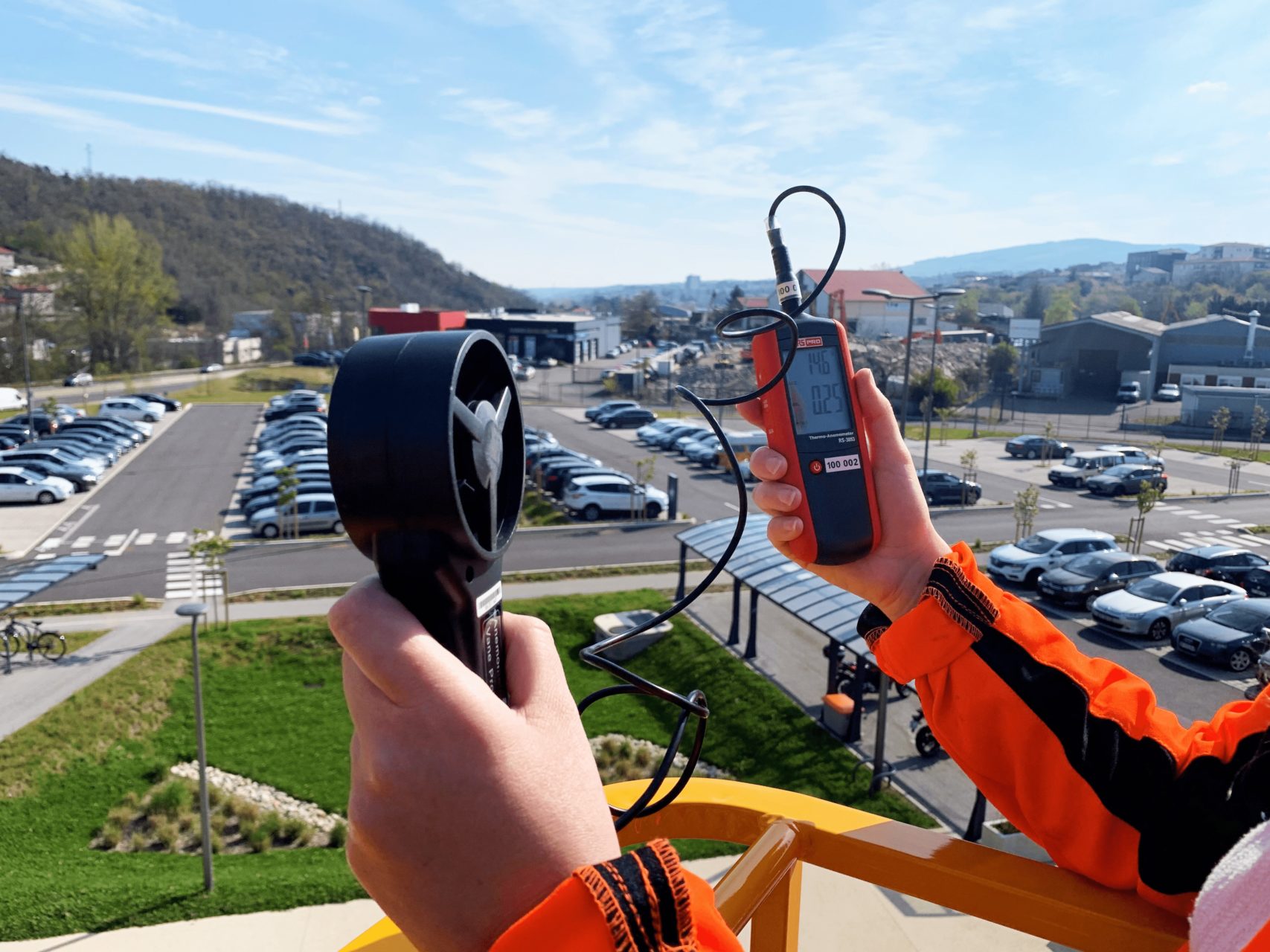
- Anemometer: measure the actual wind speed on site.
An anemometer is a reliable, accurate handheld device, available in digital and analogue versions. Measure the wind at the height where the platform will work: wind speed increases with height and can be 50% higher at 20 m above ground level. Take a measurement every hour, and keep spare batteries.
What are the risks of working in the wind?
The main hazard of operating a MEWP in windy conditions is the machine tipping over.
- Panels and large materials: they increase the surface exposed to the wind and can seriously affect stability, especially in gusts.
- Banners: a MEWP is not designed to hold one. A banner acts like a sail and can make the machine overturn.
- Gaps between buildings: the wind tunnel effect increases the speed and strength of the wind and can destabilise the machine.
Any doubt? Postpone the job
Do not underestimate the danger of working in strong or gusty winds. When wind speed exceeds 12.5 m/s (45 km/h, 28 mph), lower the platform and do not use the machine again until the wind has dropped below that speed.


