


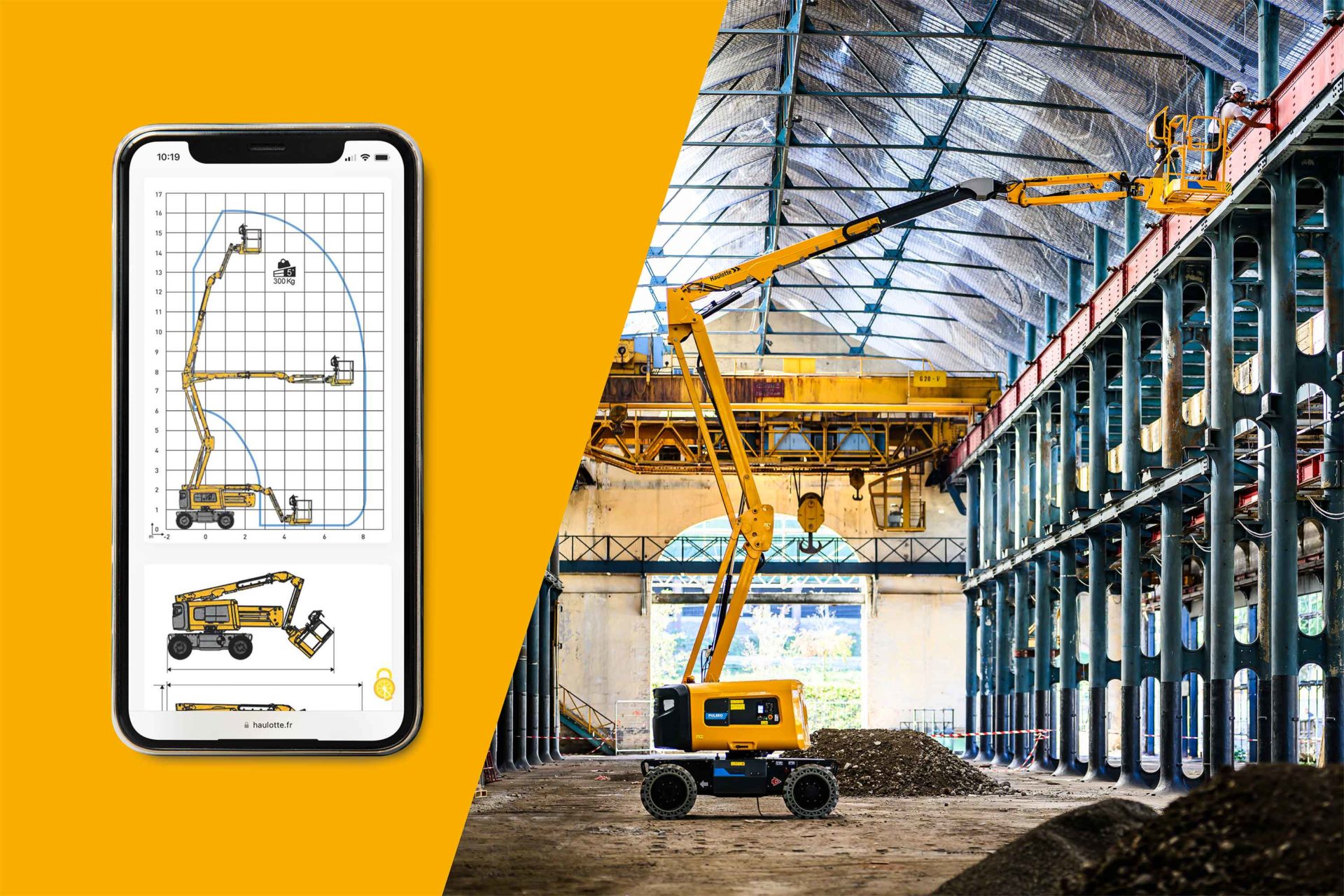
Telescopic or articulating, aerial work platforms give operators access to work areas that are hard to reach. Their working area, or range of motion, combines vertical height and horizontal outreach. A chart shows it, so you can see at a glance what the machine can do.
What is a range of motion chart?
The range of motion chart is essential information for MEWP operators. It is usually found in the operator's manual, which should be kept in the document box attached to the basket.
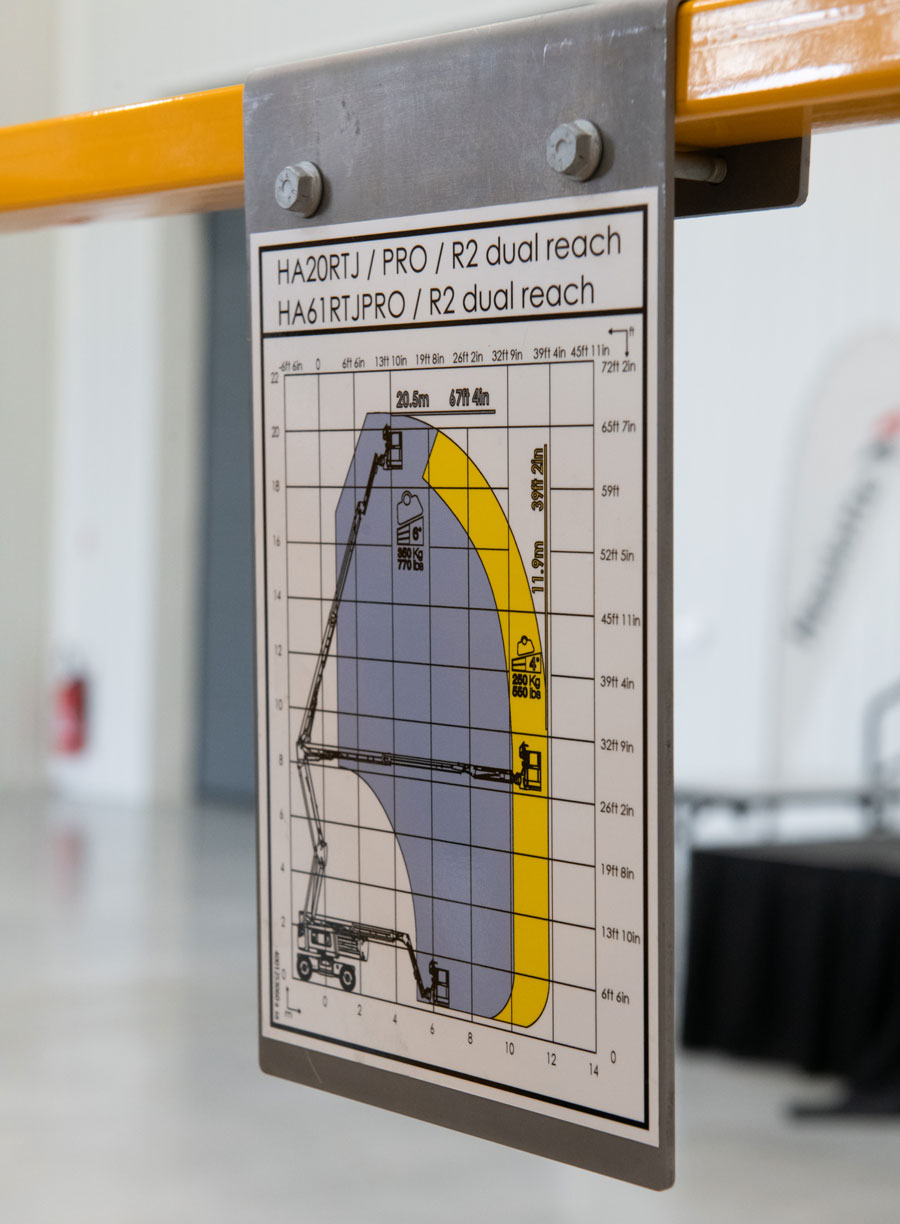
On some models, such as the Haulotte HA20 RTJ, the chart is also printed on a decal in the basket, so it can be read at a glance during operation, or even when walking up to the machine.
The chart is a 2D representation of the machine's movements, usually in the shape of an arc. It shows height, outreach and angle, and on some machines the maximum load allowed in the basket.
Why does the range of motion chart matter?
The chart is useful both before and during the job:
- Choosing the right MEWP: if the job requires a heavy load in the basket at maximum outreach, check these values on the chart. They can decide which model to choose, and sometimes lead to a machine with a slightly higher working height than first planned.
- During operation: always read the chart before starting work. Most machines lock their movements (lifting, extension) when the maximum load is reached, and a warning light comes on at the control panel. Whatever the machine, never ignore these warnings.
Why can two similar MEWPs have different charts?
Two MEWPs with similar specifications can have different range of motion charts. The reason is their design: materials, counterweight position, on-board systems and innovations.
If you rent MEWPs from different brands, do not rely on habit: always check the chart of the machine. Some machines have a regular arc-shaped working envelope; others have a jagged one, which means retracting or repositioning the boom to keep working when you reach the edge of the envelope.
Working below ground level
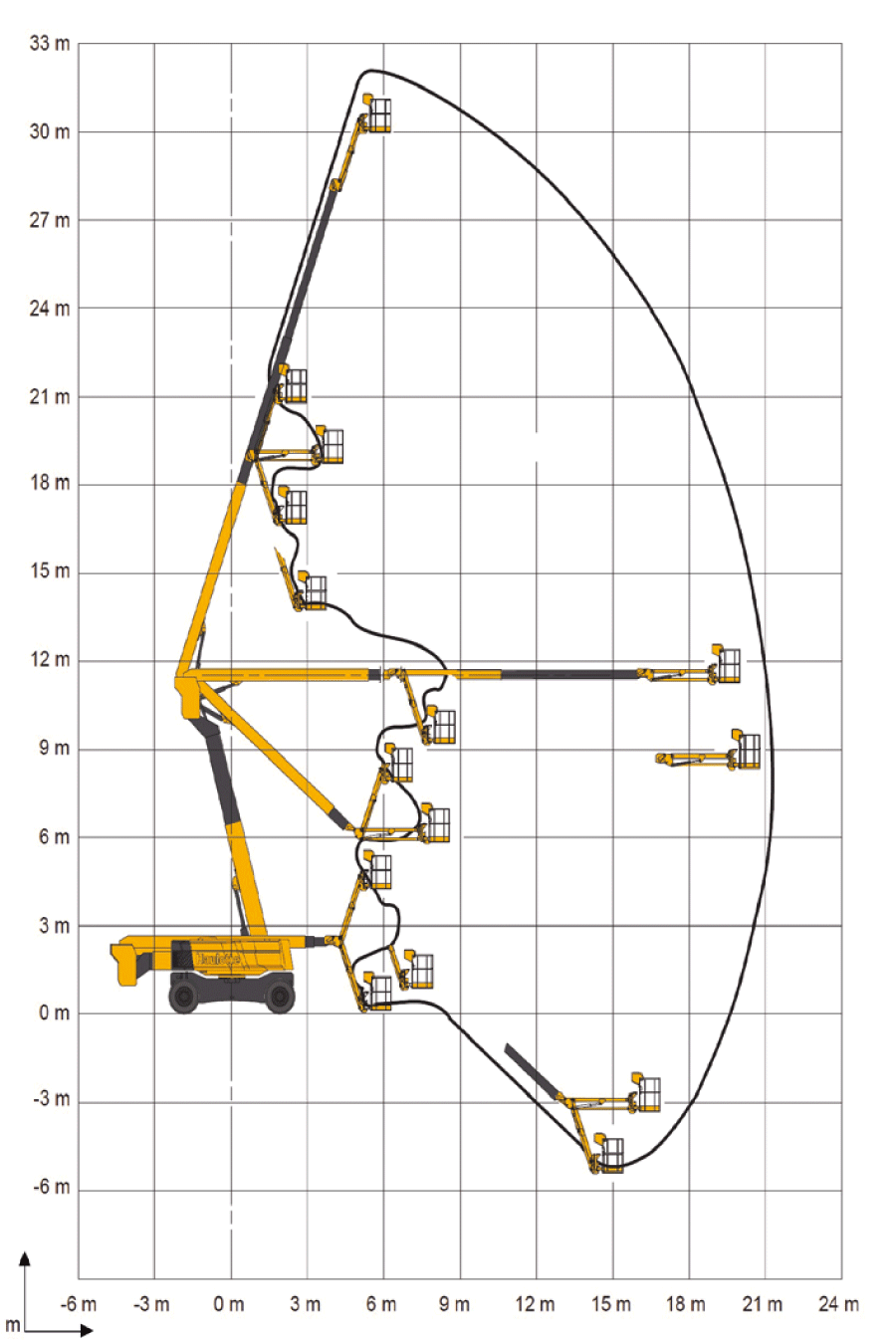
Some machines can work below ground level, which is particularly useful for bridge inspection, mining and earthworks. This is the case of the Haulotte HA32 RTJ PRO articulating boom lift and the HT28 RTJ PRO telescopic boom lift.
Haulotte Dual Reach: two working envelopes depending on the load
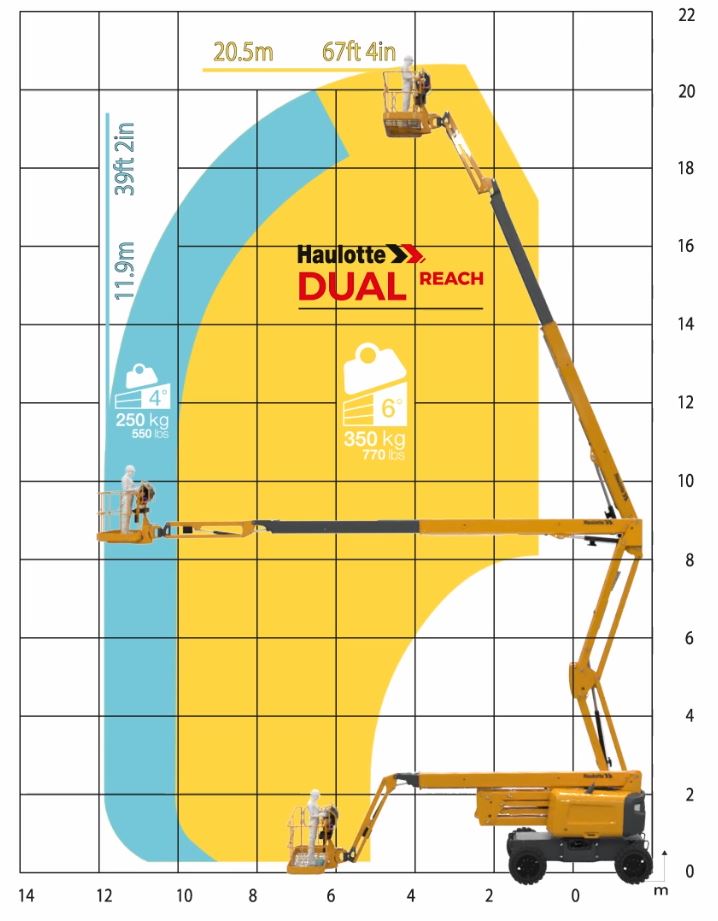
To deal with site constraints such as long outreach, slopes or heavy loads, manufacturers have developed innovations and options. Launched by Haulotte in 2024, Haulotte Dual Reach increases the load capacity of the basket on uneven ground: the machine can keep lifting and working on a slope of up to 6°, both lengthwise and sideways.
The HA20 RTJ features Haulotte Dual Reach. Its chart is a dual load chart, with two working envelopes depending on the load in the basket.
Key points to remember
- What the chart shows: a 2D diagram of height, outreach and angle.
- Why it matters: it helps you choose the right MEWP and work safely.
- Possible differences: working envelopes can be regular arcs or jagged.
- Special capabilities: below-ground work and dual load capacity.
Understanding and using the range of motion chart lets operators get the most out of their aerial work platform, safely.


